
Technology
Apollo: The Human-Like Robot that Could Redefine the Future of Work

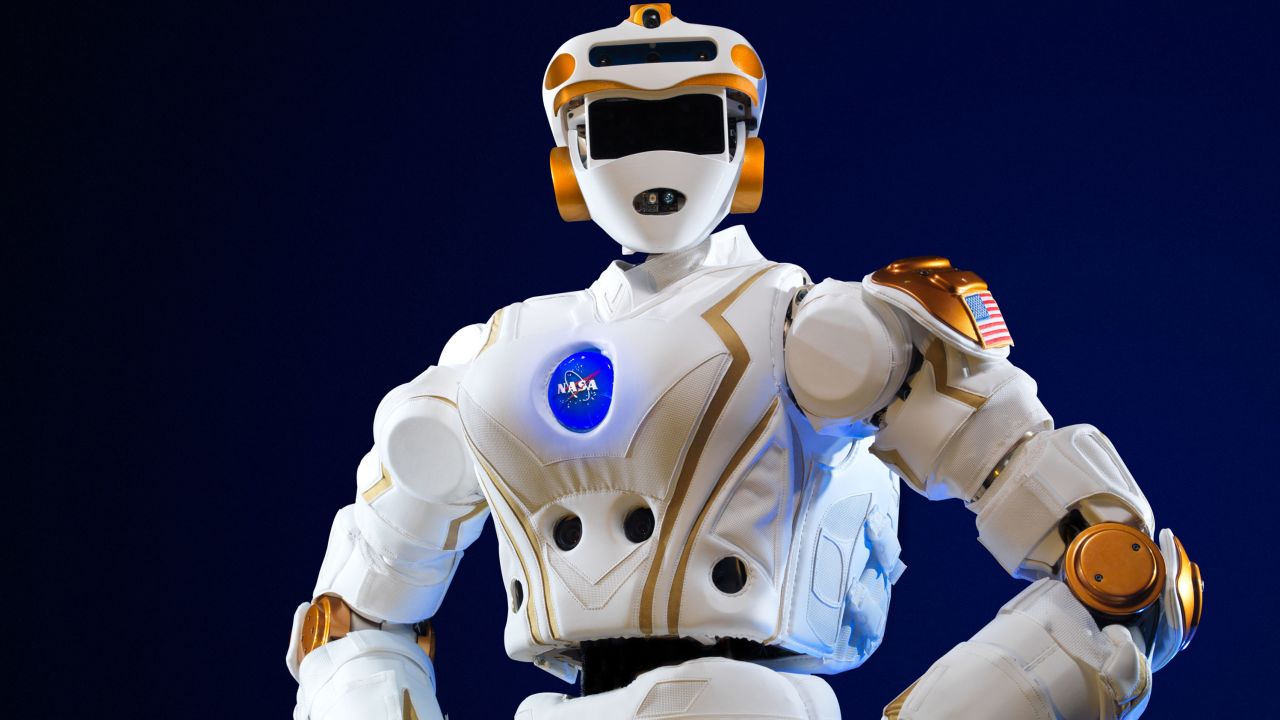
The workplace is changing rapidly thanks to the rise of automation and artificial intelligence. One of the most significant developments in this area is the development of human-like robots, such as Apollo.
Apollo is a humanoid robot developed by Apptronik, a robotics company based in Austin, Texas. It is designed to be a versatile robot that can be used in various settings, including warehouses, factories, and even space.
Apollo’s Features
Apollo is equipped with a variety of sensors and actuators, including cameras, depth sensors, and force sensors. This allows it to navigate its environment and interact with objects in a safe and controlled manner. Apollo also has a powerful computer that enables it to learn and adapt to new tasks.
Apptronik is currently developing Apollo for a variety of applications. Apollo could pick and pack orders in warehouses, load and unload trucks, and even operate forklifts. Apollo could assemble products, inspect quality, and perform maintenance tasks in factories. Apollo could conduct experiments in space, repair satellites, and even explore other planets.

The Benefits of Using Apollo
There are many potential benefits to using Apollo in the workplace. These include:
- Increased productivity: Apollo can perform tasks more quickly and efficiently than humans, increasing productivity.
- Improved safety: Apollo can work in hazardous environments that would be too risky for humans.
- Reduced costs: Apollo can replace human workers, saving businesses money on labor costs.
- Increased flexibility: Apollo can be programmed to perform various tasks, giving businesses more flexibility in their workforce.
The Challenges of Using Apollo
While there are many potential benefits to using Apollo, there are also some challenges that need to be addressed. These include:
- The cost of developing and deploying Apollo robots is still high.
- Apollo robots may not be able to adapt to unexpected situations as well as humans.
- There may be concerns about job displacement as Apollo robots become more widespread.
Despite the challenges, the potential benefits of using Apollo in the workplace outweigh the risks. Apollo has the potential to revolutionize the way we work and make businesses more productive and efficient.

The Future of Work with Apollo
The future of work is likely to be increasingly automated, with robots like Apollo playing a major role. As Apollo technology continues to develop, it is likely to become more affordable and versatile, making it even more attractive to businesses.
The widespread adoption of Apollo robots could have a significant impact on the workforce. Some jobs may be lost as robots take over tasks that are currently done by humans. However, new jobs will also be created in the development, deployment, and maintenance of Apollo robots.
Overall, the future of work with Apollo is uncertain, but it is clear that robots are becoming increasingly capable and versatile. Apollo has the potential to revolutionize the way we work, and it will be interesting to see how it is used in the years to come.





In today’s hyper-connected world, the term “smart device” is tossed around frequently, but what exactly does it mean?
A smart device is an electronic gadget that can connect to the internet, gather data from its surroundings, and perform tasks autonomously. Let’s dive into the key characteristics that make a device truly “smart” and explore both the benefits and drawbacks of this technology.
The Three Key Features of a Smart Device
1. Context Awareness
A smart device can understand its environment and adapt its behavior accordingly. This ability, known as context awareness, relies on sensors like cameras, microphones, GPS receivers, radar, and LiDAR. These sensors collect data, which the device uses to make informed decisions. For example, a smart thermostat can detect the current temperature and adjust the heating or cooling system without manual input.
2. Autonomous Computing
Autonomous computing is the capability of a device to perform tasks independently, without requiring direct user commands. Consider your smartphone, which might suggest an umbrella if it detects rain in the forecast. This simple action demonstrates the power of autonomous computing—using context data to make decisions on your behalf.
3. Connectivity
Connectivity is the backbone of a smart device’s functionality. It allows these devices to communicate with each other and the broader Internet of Things (IoT). Whether through Wi-Fi, Bluetooth, or another wireless connection, smart devices use connectivity to share data and work together seamlessly.
How Do Smart Devices Work?
Smart devices rely on IoT to connect with sensors attached to objects or other networked devices. These sensors gather data, which the smart device can store, analyze, and share with other devices. When multiple smart devices are connected to the same network, they can be managed through a single platform, making it easier to monitor and control them remotely.
Do Smart Devices Need Human Interaction?
Not all smart devices are designed to interact directly with humans. While we often think of smartphones, smart TVs, or smartwatches, many smart devices operate independently of human input. For instance, a weather probe might collect and transmit data without any direct human involvement. Although humans will eventually use this data, the device itself functions autonomously.
Must Smart Devices Be Portable?
Not necessarily. Take a smart surveillance camera, for example. It meets the criteria of a smart device—it’s context-aware (it can recognize objects), autonomously computes (it identifies and reports objects using computer vision), and is connected to a network (it sends data to a server). Portability isn’t a requirement for a device to be smart; what matters is its ability to sense, process, and connect.
Benefits of Smart Devices
Energy Savings: Smart devices can reduce energy consumption by automatically turning off when not in use or following pre-set schedules, like dimming lights in the evening.
Worker Productivity: These devices can automate repetitive tasks, freeing up time for more complex work. For businesses, this translates to higher productivity and efficiency.
Health Monitoring: Wearable devices like smartwatches can track vital signs and send health data to medical teams, enabling faster responses to potential health issues.
Security Measures: Smart cameras and sensors allow for constant monitoring of homes or workplaces, sending alerts if unusual activity is detected.
Drawbacks of Smart Devices
Additional Costs: The initial cost of installing smart devices can be high, and ongoing maintenance can add to the expense.
Cyber Threats: The connectivity that makes smart devices so useful also makes them vulnerable to hacking. Without proper security measures, users risk cyberattacks.
Compatibility Issues: Devices from different brands may not work well together, limiting the effectiveness of a smart network.
Reliance on the Internet: Without a stable internet connection, many smart devices are rendered useless. This dependence can be a significant drawback in areas with limited or unreliable internet access.
Final Thoughts
Smart devices are an integral part of modern life, offering numerous benefits while also presenting some challenges. Understanding what makes a device smart—context awareness, autonomous computing, and connectivity—can help you make informed decisions about incorporating these technologies into your life. Whether enhancing productivity, saving energy, or improving security, smart devices have the potential to transform the way we live and work. However, it’s essential to consider the potential downsides, such as costs, security risks, and compatibility issues, to ensure you’re making the most of these innovative tools.


The Middle East and North Africa (MENA) region has long been a hub of innovation and growth, and its streaming industry is no exception. The landscape has witnessed a significant shift in recent years, with the rise of flexible streaming services transforming how people consume content.
The convergence of advanced broadcast technology and widespread high-speed internet has paved the way for this streaming revolution, offering viewers many choices beyond traditional playout models.
The Rise of On-Demand Streaming
Over the past decade, on-demand streaming has seen unprecedented success in the MENA region. Projections suggest that by 2027, the region will boast over 36 million subscription video on-demand (SVOD) subscriptions.
While subscription platforms have firmly established themselves in the market, consumer expectations have evolved, giving rise to the trend of ad-supported content.

Ad-Supported Content: Meeting Viewer Demands
Ad-supported content has become a dynamic trend, meeting viewers’ demands for cost-effectiveness and personalized viewing experiences. The appeal lies in accessing an expansive content library without a financial commitment and in the ability to indulge in shows and movies tailored to individual interests.
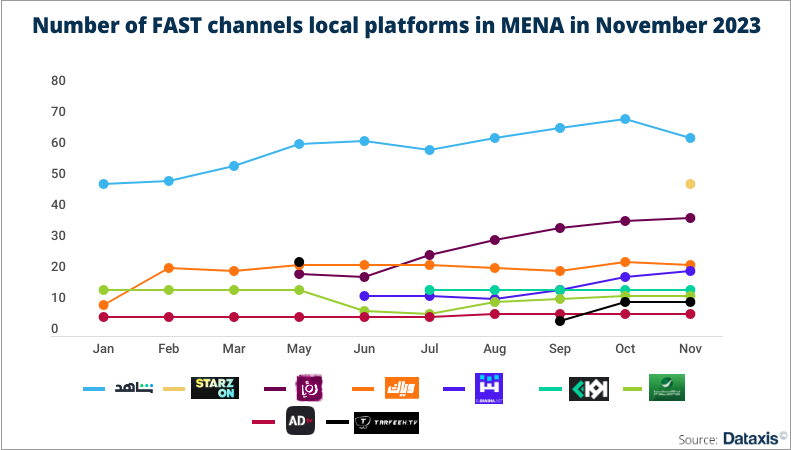
Ad-supported video on demand (AVOD) has been a popular choice, but as preferences shift towards interest-based content, Free Ad-Supported Television (FAST) channels are gaining rapid favor.
These channels offer a unique platform for immersive experiences, allowing users to customize their viewing experiences by pausing, rewinding, and fast-forwarding through content.
Exploring the FAST Channels
FAST channels represent a departure from familiar viewing models, combining the advantages of linear TV with the flexibility of on-demand streaming.
They empower consumers to have greater control over their viewing experiences, offering a curated selection of localized and globally popular content, including live TV.
In the MENA region, where cultural diversity is significant, resonating with audiences is crucial. FAST channels cater to this by providing a curated selection of content that appeals to a broad audience without the constraints of a subscription model.
Digital Investment and Monetization
Digital advertising has seen a marked increase globally, and the MENA region is no exception. FAST channels have become avenues for reaching wider audiences, resulting in a boost in revenue streams.
Despite offering free content, these channels attract a diverse and engaged audience, giving brands a unique opportunity to showcase their products or services.
The FAST model revolutionizes the advertising experience by allowing advertisers to adjust their campaigns in real-time dynamically. This flexibility ensures that advertising messages adapt to changing circumstances, reaching the right viewers at the right time.
Data-driven targeting techniques enable advertisers to pinpoint specific audience segments based on interests, behavior, and demographics, creating highly personalized and relevant ads that enhance engagement.
Navigating Technological Requirements
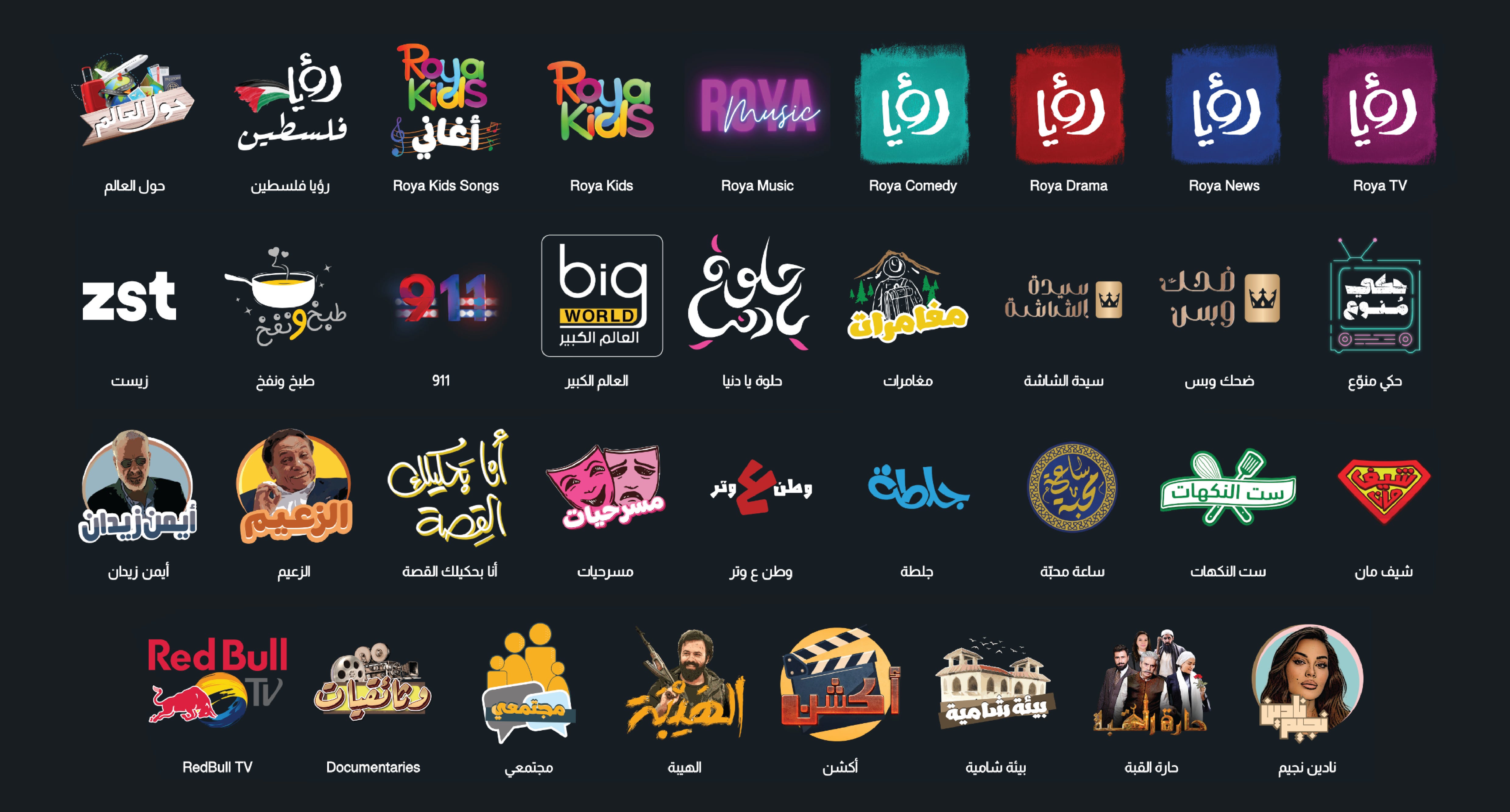
While the monetization prospects from FAST channels are promising, it’s crucial not to overlook the associated technological requirements. The unique business model of FAST TV channels, which relies on ad sales revenue, demands a deep understanding of channel management and ad sales operations.
Proficiency in content licensing and compliance is equally crucial due to various regions’ different advertising and broadcasting regulations.
As the MENA region stands poised to lead the FAST race, improving connectivity will provide new opportunities for channel providers to reach larger audiences across a spectrum of devices.
The coming times promise closer collaboration between broadcasters and advertisers, paving the way for innovative viewing solutions tailored to a thriving young demographic.

Leading Platforms in the MENA Streaming Landscape
Several platforms are leading the charge in the MENA streaming landscape, offering diverse content to cater to evolving viewer preferences.
Awaan: Gateway to Rich Arabic Content
Awaan serves as the Arab world’s gateway to entertainment, offering diverse shows, movies, and exclusive content that caters to locally relevant and globally appealing entertainment.
Weyyak: Global Stage for Arabic Content
Weyyak provides a global stage for Arabic content, specializing in Arabic dramas and series, with an extensive library of culturally resonant content.
Shahid: Premium Content Bridging Cultures
Shahid seamlessly bridges cultures through its vast collection of Arabic and international shows, catering to diverse tastes and ensuring viewers find an eclectic mix of entertainment options.
OSN Play: Beyond Traditional Boundaries
OSN Play goes beyond traditional entertainment boundaries by offering a blend of live TV, on-demand content, and exclusive programming, making it a preferred choice for those seeking variety and quality.
StarzPlay Arabia: Home of Blockbuster Entertainment
StarzPlay Arabia has become synonymous with blockbuster entertainment in the Middle East, boasting an extensive library of movies, series, and exclusive Starz content.
Tarfeeh: Redefining Entertainment Accessibility
Tarfeeh channels contribute to the vibrant tapestry of streaming choices, redefining entertainment accessibility in the MENA region with a commitment to offering diverse content and a unique viewing experience.
Dreamax: Gateway to Diverse Content
Dreamax stands out as a gateway to diverse content, catering to the evolving preferences of Middle Eastern audiences by providing a seamless streaming experience and a curated selection of shows.

Future Outlook
As the streaming landscape in the Middle East continues to evolve, these platforms are at the forefront of providing innovative solutions for a thriving young demographic.
With better connectivity enveloping the region, viewers can expect an even broader range of entertainment options delivered seamlessly across various devices.
In conclusion, the MENA streaming scene is witnessing a transformative era, and platforms like Awaan, Weyyak, Shahid, OSN Play, StarzPlay Arabia, Tarfeeh, and Dreamax are not just streaming services but cultural hubs that cater to the rich tapestry of preferences in the Middle East.
As these platforms redefine the digital entertainment experience, viewers can look forward to a future where streaming is not just a trend but a way of life.
The advent of FAST channels adds a new dimension to this journey, giving viewers more control and flexibility in their content consumption.

Due to the unstoppable march of technological advancements, the face of warfare has undergone a significant transformation in recent decades. From the unmanned aerial vehicles that dominate the skies to the artificial intelligence that guides our weaponry, technology has permeated every aspect of modern combat, fundamentally altering how wars are fought and won.
The Proliferation of Unmanned Systems
One of the most transformative technologies to emerge in modern warfare is the unmanned aerial vehicle (UAV), more commonly known as a drone. These unmanned aircraft have revolutionized warfare by providing a means of conducting surveillance, reconnaissance, and even combat missions without risking the lives of human pilots.
Their ability to operate in hazardous environments, collect real-time data, and strike targets precisely has made them indispensable tools for militaries worldwide.
The use of drones has not been without its ethical and legal challenges. Concerns over civilian casualties and the potential for autonomous weapons systems to operate without human oversight have sparked debate about the proper role of drones in warfare. Despite these challenges, the proliferation of drones is likely to continue, further blurring the lines between war and peace.

AI: Revolutionizing Strategic Planning and Weaponry
Artificial intelligence (AI) has emerged as another game-changer in modern warfare. Its ability to analyze vast datasets, identify patterns, and make predictions has transformed strategic planning, enabling militaries to gain a deeper understanding of the battlefield and make more informed decisions.
AI is also being integrated into weapon systems, enhancing their precision and effectiveness. For instance, AI-powered missile systems can identify and track targets more accurately, reducing the risk of misfires.
However, the integration of AI in warfare raises significant ethical concerns. The potential for autonomous weapons systems to operate without human oversight raises questions about losing human control over warfare and the potential for unintended consequences. Governments and militaries must carefully consider the ethical implications of AI in warfare to ensure that it is used responsibly and ethically.

Cyber Warfare
The advent of the digital age has ushered in a new dimension of warfare: cyber warfare. This conflict involves using technology to disrupt or destroy an enemy’s computer systems, networks, and digital infrastructure.
Cyberwarfare has the potential to cripple a nation’s defense capabilities, disrupt its economy, and cause widespread chaos.
The growing sophistication of cyberwarfare capabilities has made it an increasingly prominent threat in modern warfare. As militaries become more reliant on interconnected technology, they become more vulnerable to cyberattacks. This has led to a growing emphasis on cyber defense, with militaries investing heavily in cyber security measures to protect their systems and data.
The Lifeline of Modern Warfare
Communication technology has also seen significant advancements in recent decades, with secure and encrypted communication systems now being a standard feature in military operations. These systems allow for efficient coordination and information sharing among different units, enhancing operational efficiency and effectiveness.
The importance of reliable and secure communication in modern warfare cannot be overstated. Effective communication is crucial for command and control, battlefield coordination, and intelligence sharing. Without secure communication, militaries would be severely hampered in their ability to conduct operations effectively.

Ethical Considerations
The transformative impact of technology on modern warfare has not come without ethical challenges. Using unmanned systems, autonomous weapons, and cyber warfare raises concerns about the loss of human control over warfare, the potential for collateral damage, and the blurring of the lines between war and peace.
As technology evolves at an unprecedented pace, engaging in ongoing discussions about the ethical implications of its use in warfare is essential. Governments, militaries, and civil society must work together to establish clear guidelines and regulations that ensure that technology is used responsibly and ethically in pursuing peaceful resolutions to conflicts.
Technological advancements will probably shape warfare more and more in the future. New technologies, such as quantum computing and hypersonic weapons, can potentially revolutionize the way wars are fought further. It is, therefore, crucial to anticipate and prepare for these emerging threats, ensuring that militaries can adapt to new technologies while upholding ethical and legal principles.
Technology has played a pivotal role in modern warfare, transforming every aspect of combat, from intelligence gathering to strategic planning to operational execution.
This transformative impact, however, has come with ethical and legal challenges, highlighting the need for ongoing discussions about the responsible and ethical use of technology in warfare.
As technology evolves, militaries must adapt while upholding ethical principles to ensure that warfare is conducted to minimize harm and promote peace.

Imagine a future not too distant, the year 2025, where the glittering lights of the Academy Awards illuminate a groundbreaking moment in cinematic history: an artificial intelligence (AI) system clinches the Oscar for Best Original Screenplay.
This is no sci-fi fantasy; it’s a rapidly approaching reality where AI’s foray into filmmaking is not just a possibility but an imminent revolution.
AI’s Evolution in Storytelling
The art of storytelling, an intrinsic part of human culture dating back 30,000 years to cave drawings in France, is undergoing a seismic shift. The narrative journey has evolved from hand-illustrated cave walls to pen and paper and now to the realm of digital technology, where stories are visually narrated through movies.
AI, in its ever-advancing form, is set to take the helm of this evolution. Renowned figures like Joe Russo, director of Marvel’s “Avengers: Endgame” and an AI company board member, affirm this progression. They foresee AI radically altering the way we conceive and tell stories.

AI emerges as a game-changing ally in Hollywood, where time, effort, and financial investment are crucial. It’s not just about generating scenes, scripts, characters, dialogues, and soundtracks; AI’s role extends to analyzing scripts for their box office potential, suggesting the viability of projects, and even scouting film locations.
Director Chad Nelson’s use of AI to produce an animated short film vividly demonstrates this technological prowess by showcasing AI’s capacity to produce thousands of images and contribute creatively to filmmaking.
The Magic of AI
AI’s capabilities in film extend beyond mere logistical and creative support. It breathes new life into cinema through enhancements like de-aging actors, exemplified by Harrison Ford’s rejuvenated appearance in the new Indiana Jones film.
Greg Brockman, president of OpenAI, envisions a future where AI transcends traditional viewing experiences, offering personalized movies tailored to individual tastes. Imagine coming home, weary from work, and asking your AI to whip up a light-hearted romcom set in Greece, with you as the protagonist alongside Marilyn Monroe.
It’s a future where the line between viewer and participant blurs, creating a uniquely immersive experience.

The Limitations of AI in Creativity
Despite these advancements, AI’s infiltration into the creative domain isn’t without its challenges. The essence of storytelling, deeply rooted in human emotion and interaction, remains a frontier AI struggles to conquer fully.
Director John Finger and AI expert Stuart Russell point out that AI, in its current form, operates with a level of objectivity that lacks the nuanced understanding of the human condition necessary for compelling storytelling.
AI-generated art, they argue, is only as good as the human input guiding it, highlighting the collaborative nature of this technological tool.
The Future of AI in Filmmaking
As we navigate this new era of AI-driven cinema, the question arises: will AI replace human creatives, or will it serve as a collaborative tool that enhances human creativity? The potential of AI to perform tasks with speed and efficiency that humans can’t match is undeniable.
However, its ability to fully grasp and replicate the depth of human emotion and creativity remains debatable. The journey of AI in filmmaking is not just about technological prowess; it’s a dialogue between machine efficiency and human creativity.

AI and Human Creativity
As we approach 2025, the future of filmmaking is a landscape where AI plays a pivotal role, yet it’s a domain still deeply rooted in human creativity and emotion. As AI continues to evolve and expand its capabilities, the film industry stands on the cusp of a new era.
One where AI is not just a tool but a collaborator, augmenting human imagination and pushing the boundaries of what’s possible in storytelling.
This partnership between humans and machines promises a cinematic future as exciting as it is uncertain, beckoning us to embrace both the possibilities and challenges it brings.
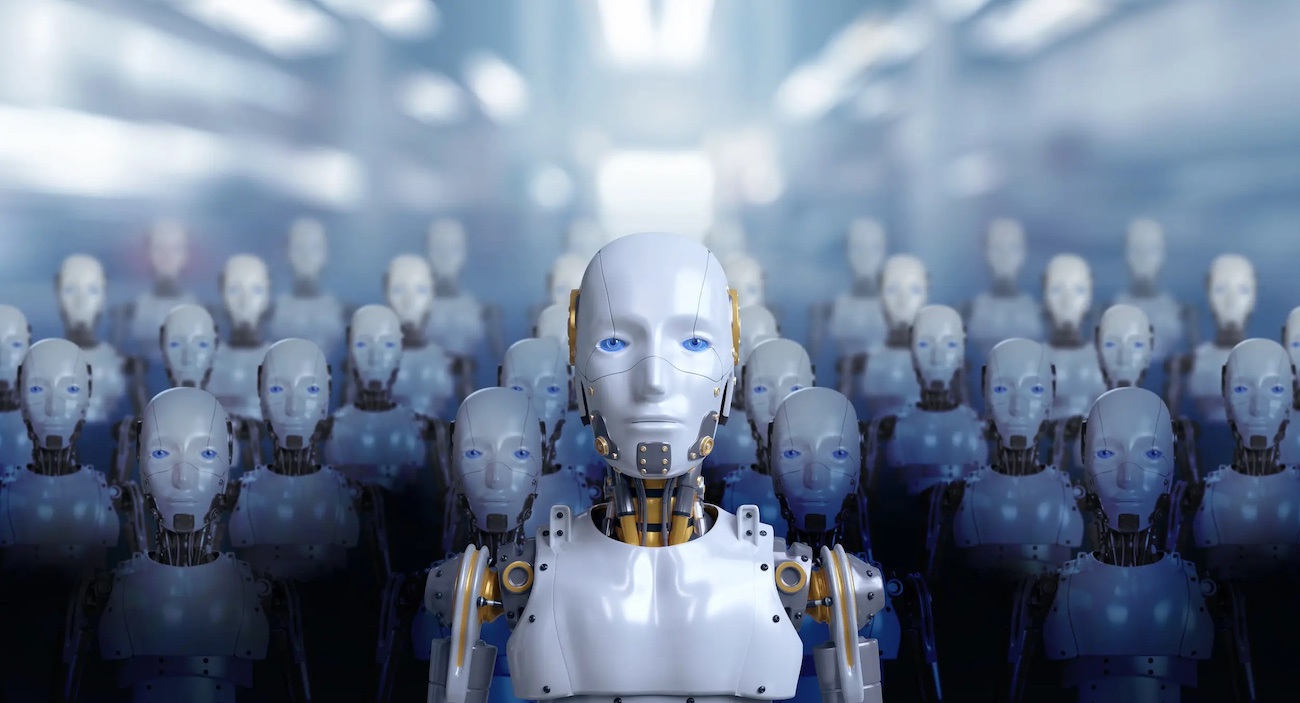
The rapid advancement of technology has always posed challenges to job opportunities, from the Industrial Revolution to the present day. However, some experts argue that with the rise of artificial intelligence (AI), the threat to jobs has reached an unprecedented level.
There are concerns that robots may eventually take over many of the jobs currently performed by humans.
The Power of Robots
According to a report published by Goldman Sachs in March 2023, AI has the potential to perform a quarter of all jobs that exist today. This staggering statistic highlights the transformative power of AI and the potential impact it could have on the workforce.
Martin Ford, the author of “The Rise of the Robots: Technology and the Threat of a Jobless Future,” warns about the dire consequences of widespread job automation.
He suggests that a large number of people could become unemployed simultaneously, which would have a significant impact not only on individuals but also on the entire economy.
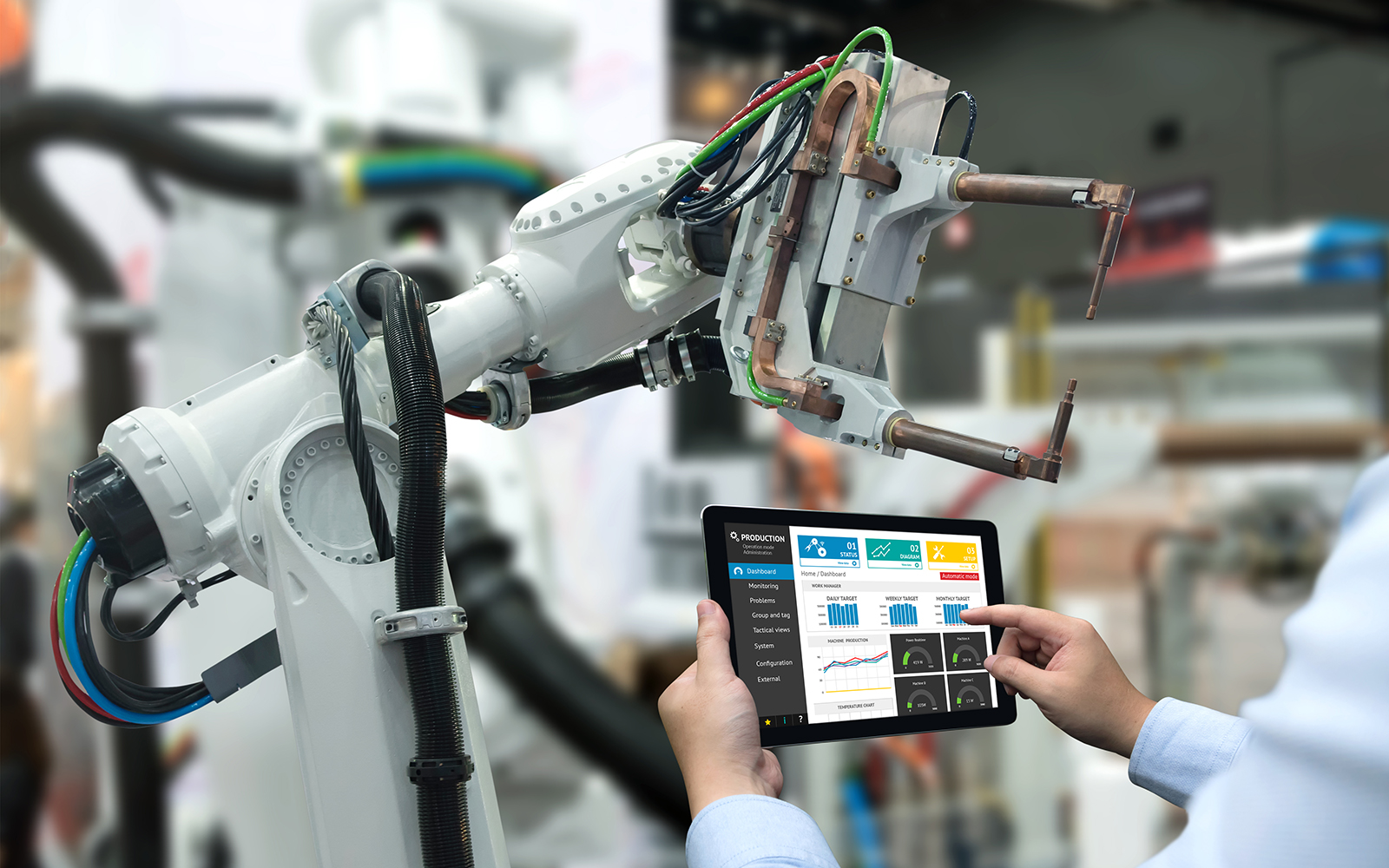
Jobs That AI Can’t Do
Despite the concerns surrounding AI’s impact on employment, there are still jobs that AI cannot perform. Experts emphasize that tasks requiring emotional intelligence or creative thinking, which are unique to humans, are particularly challenging for AI systems to replicate.
While the rise of AI may pose a threat to certain job sectors, there are specific areas that currently appear relatively low-risk. Martin Ford identifies three categories of jobs that are less susceptible to automation.
- Jobs Requiring Genuine Creativity: Jobs that involve generating new ideas and building something new, rather than simply following predefined processes, are less likely to be automated. However, it is essential to note that not all creative jobs are safe from automation. Fields such as graphic design or visual arts could be among the first to be affected, as AI algorithms can analyze visuals and create impressive works.
- Jobs Requiring Interpersonal Skills: Occupations that involve significant interpersonal relations, such as nursing, business consulting, or investigative journalism, are considered safer from automation. Developing relationships and understanding people’s needs and emotions are skills that AI struggles to replicate effectively.
- Jobs Requiring Physical Skills and Problem-Solving in Unpredictable Environments: Professions like electricians, plumbers, or welders fall into this category. These jobs frequently encounter new and unpredictable situations, making it challenging for AI to handle the required tasks. Advanced robotics that could perform such jobs at a human-like level is still mainly in science fiction.

The Future of Work
While jobs in the above categories may be relatively safer from full automation, it would be incorrect to assume that they will remain unaffected by AI. Joanne Song McLaughlin, an academic researcher focusing on labor economics, emphasizes that most jobs, regardless of the sector, may have certain aspects that could be subject to automation.
The tasks performed within jobs may change, placing greater importance on skills related to building interpersonal relationships.
How Will AI Rule the World?
Engaging in dynamic and unpredictable tasks within changing environments can reduce the likelihood of AI taking over jobs, at least for now. However, it is crucial to recognize that AI will continue to evolve, and job roles may need to adapt accordingly.
While some jobs may be at higher risk, individuals who continuously assess which tasks AI can perform or improve upon and focus on adding value in areas that complement AI’s capabilities are more likely to thrive in the future of work.
Adapting skills and staying informed about AI developments will be crucial for individuals and organizations to navigate the changing work landscape in the age of artificial intelligence.

For the past 25 years, Google has been the dominant online search engine everyone uses daily. However, it has remained relatively unchanged. That is, until the emergence of transformative artificial intelligence.
The Revolution of Artificial Intelligence
The rapid evolution in artificial intelligence has rendered traditional keyword searches and lists of electronic links outdated compared to the conversations millions of people have with AI interfaces like ChatGPT (OpenAI) and BERT (Google).
Stefan Sieg, Product Manager at Software AG, explains that people are starting to realize that they use Google not just to search for websites but to find answers to their questions.
The integration of chatbot technology, such as Microsoft’s ChatGPT, into search engines like Bing has enabled direct responses to user queries, providing comprehensive summaries of available information followed by suggested conversation threads.

Microsoft’s Integration of Chatbots in Bing
Microsoft has taken the lead by integrating chatbot technology (modeled after ChatGPT) into its search engine, Bing. With Bing’s new version, made available to the public last week after a three-month trial period, the search engine can directly answer user queries, providing extensive information and suggested conversation threads with the chatbot.
AI-powered chatbots can now generate product comparisons, propose activity plans, create calendars, and assist with job interviews, among other tasks.
This shift in search capabilities has prompted the fragmentation of search processes into multiple interfaces, expanding beyond the centralized search engine approach that Google has relied on.
The Challenge of Trust
Cathy Edwards, VP of Engineering at Google, says users no longer need to input keywords during search operations since AI-powered search engines can do the work for them. The new AI-integrated search platforms, similar to Microsoft’s approach, provide concise written responses and allow users to refine their results with additional questions.
Personal AI assistants like “Replika” and “Anima” already offer conversational AI companionship. However, the vision of having a personal genius who gathers information from multiple sources, such as smartphones, computers, televisions, and cars, to answer questions and fulfill tasks is still a dream.
The integration of personal AI assistants into everyday life has the potential to revolutionize internet usage.
As a media projects owner, John Patel raises concerns about trusting electronic travel agency clients to provide the best options, emphasizing the need for a personal genius to negotiate services. As the competition intensifies, distinguishing reliable results from deceptive ones becomes more challenging.

Google’s New Model
While Google’s future may be uncertain, Elizabeth Reed, VP of Search at Google, believes that advertising will continue to play a vital role.
The new model introduced by Google retains the presence of advertisements on the internet, whether at the forefront of search results or the bottom, depending on the nature of the query.
According to Reed, “We cannot predict the future, but I believe that advertisements will continue to be crucial.” Despite the advancements in AI and conversational interfaces, advertising remains an essential component of the Internet ecosystem.
Integrating AI into search engines has opened up new possibilities for users to find the products and information they desire without clicking on advertisements.
However, ensuring the confidentiality of personal data, which is currently utilized for targeted advertising, becomes necessary as AI models trained on personal data continue to advance.
Jim Lecinski, a marketing professor at Kellogg School of Management, acknowledges that Google will not disappear soon. He explains that four years ago, with the advent of voice assistant tools like Google Assistant, Alexa (Amazon), and Siri (Apple), people were believed to only interact with machines.
However, the emergence of generative AI has prompted a reevaluation of the internet’s economic model.

AI-powered search engines
Introducing AI-powered search engines that utilize natural language processing and conversation-based interactions significantly transforms how users engage with information online. The goal is to create a more natural and intuitive process, as easy as asking a knowledgeable friend in any field.
While concerns remain regarding the potential loss of personal interaction and trust in search results, the deployment of AI assistants can be a guiding companion in navigating the vast sea of online information.
Developing advanced language models and integrating personal AI assistants can lead to a personalized and efficient search experience tailored to individual preferences and needs.
The influence of artificial intelligence on Internet search engines is revolutionizing how people search for information and engage with search platforms. Introducing conversational interfaces and AI-powered chatbots has paved the way for more natural and personalized search experiences.
However, challenges related to trust, data privacy, and maintaining a balance between user satisfaction and targeted advertising persist.
The future of search engines will depend on the continuous advancements in AI technology, user preferences, and the ability to adapt to changing user behaviors and expectations.


Unlocking the Power of Smart Devices: What You Need to Know

AI’s Journey Through the Heart of Political Change

Saudi Arabia’s Tech Revolution: A Blueprint for Global Innovation

New Revolution in MENA Region: FAST and Ad-Supported

How Technology is Reshaping Modern Warfare

AI in Hollywood: A New Scriptwriter in Town

Use these services to get free cloud space

Emerging Titan: India’s Strategic Move on The Global Chessboard
New Revolution in MENA Region: FAST and Ad-Supported

From Unity to Split: Is This Libya’s New Chapter?

Navigating The New Silk Road: A Ten-Year Retrospective
How Technology is Reshaping Modern Warfare

-
 Technology12 months ago
Use these services to get free cloud space
-
 Poltics2 years ago
Emerging Titan: India’s Strategic Move on The Global Chessboard
-
 Technology3 months ago
New Revolution in MENA Region: FAST and Ad-Supported
-
 Poltics4 months ago
From Unity to Split: Is This Libya’s New Chapter?
-
 Poltics4 months ago
Navigating The New Silk Road: A Ten-Year Retrospective
-
 Technology3 months ago
How Technology is Reshaping Modern Warfare